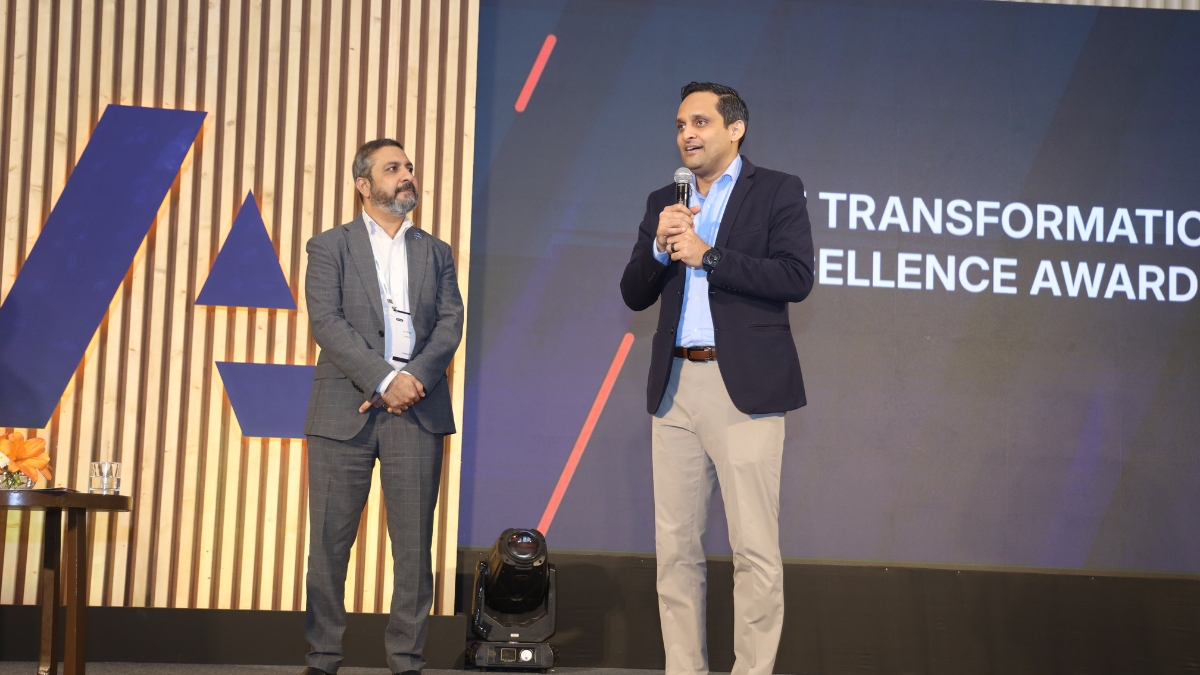

INTERVIEW: Vishnu Sharma, Founder & CEO, Efficacy Worldwide
1. How is AI fundamentally changing the way advertising agencies operate today compared to just 3–5 years ago?
Three to five years ago, AI in advertising was largely a buzzword. Today, it has become deeply operational. At Efficacy Worldwide, we've seen AI shift from being a futuristic concept to a genuine workhorse across planning, production, performance measurement, and workflow automation.
The most fundamental change is the speed at which we can now move from insight to execution. What used to take weeks of manual research, briefing, and iteration can now happen in days — sometimes even hours. Media planning has become far more data-driven, with AI systems helping us model audience behaviour with a precision that simply wasn't possible before. Creative production has also accelerated because generative systems now allow us to rapidly produce multiple asset variants, which is critical in a market as fragmented and linguistically diverse as India.
But perhaps the biggest shift is cultural. Agencies that were built primarily on intuition and relationships are now also having to build analytical and technological muscle. The question is no longer whether to use AI, but how to use it intelligently and responsibly.
At Efficacy Worldwide, this transformation has also led us to establish a dedicated AI vertical focused not just on using AI tools, but on building proprietary AI-led solutions tailored specifically for advertising and media. Our focus increasingly is on developing domain-specific systems powered through LLM architectures, RAG implementations, workflow automation, and scalable intelligence layers for communication ecosystems.
2. Which areas of the advertising workflow are seeing the highest impact from AI — media buying, content creation, audience targeting, or analytics?
All four are being transformed, but if I had to rank by impact right now, I would put audience targeting and analytics at the top, followed closely by media buying, and then content creation.
Targeting and analytics have seen the most dramatic shifts because AI can now process enormous volumes of first-party and third-party data to identify not just who your audience is, but when and where they are most receptive. The predictive capabilities are remarkable because we are moving from demographic targeting toward intent-based and contextual intelligence that is significantly more efficient.
Programmatic media buying has also matured rapidly. Real-time bidding powered by machine learning means media investments work harder than ever before. We're seeing better ROI, less wastage, stronger accountability, and more adaptive optimisation frameworks.
Content creation is catching up quickly. Generative AI systems are helping produce scripts, social copy, visual references, and content variants at scale. However, this is also where I remain cautious because AI-generated work can become generic if there is no human editorial judgment involved. At Efficacy, we treat AI as an enabler and accelerator — not a replacement for strategic thinking or creative sensitivity.
Increasingly, we are also seeing that the real competitive advantage lies not merely in adopting AI tools, but in building customised intelligence layers and AI ecosystems tailored to specific client requirements. This is an area where Efficacy Worldwide has been investing significantly through our dedicated AI solutions practice.
3. Can AI genuinely improve creativity in advertising, or is it primarily an efficiency tool?
This is a question I find genuinely fascinating, and I believe the honest answer is both — but not equally. As an efficiency tool, AI is undeniable. It removes many of the repetitive and mechanical aspects of creative production — resizing assets, generating copy variations, translating content, creating mood boards, organising research references — and frees creative teams to focus on higher-order thinking. That is a very meaningful shift.
But can AI itself be genuinely creative? I think it can absolutely assist creativity in powerful ways. It can expose teams to unexpected references, accelerate ideation, help overcome mental blocks, and rapidly prototype early-stage concepts. At Efficacy, we've had instances where AI-generated rough explorations sparked directions that our teams later elevated into highly original campaign thinking.
However, AI still does not understand emotional nuance, cultural context, human aspiration, or lived experience the way exceptional creative professionals do. Great Indian advertising is deeply rooted in cultural empathy and emotional truth. Those are still profoundly human capabilities.
So, I see AI not as a creative replacement, but as a highly capable creative collaborator. We also believe the future will belong to hybrid creative ecosystems where human imagination is enhanced by specialised AI systems trained for domain-specific advertising applications rather than generic outputs.
4. How are agencies balancing human insight with AI-generated recommendations in campaign strategy and execution?
The agencies doing this well — and we strive to be one of them — are the ones that have thought carefully about where human judgment is irreplaceable and where AI can meaningfully lead.
In strategy, AI can surface insights from data at a scale and speed that humans simply cannot match. But the interpretation of those insights, the strategic narrative, the emotional framing of a campaign, and the understanding of brand context remain deeply human functions. We use AI to inform our strategy, not to replace strategic thinking.
In execution, the balance shifts somewhat. AI can efficiently manage media optimisation, dynamic testing, reporting, and performance monitoring. Our teams then focus on the more nuanced decisions — what feels right for the brand, what resonates culturally, and what communication direction feels authentic.
The risk I see in the industry is at both extremes — agencies that over-rely on AI outputs without applying critical judgment, and agencies that resist AI entirely because of fear or inertia. The real opportunity lies in a collaborative model where AI augments human capability rather than replacing it.
Internally, we describe this philosophy as “AI-assisted, human-led,” but increasingly supported through proprietary AI workflows, retrieval systems, and intelligence layers being developed within Efficacy Worldwide’s AI vertical.
5. What role does AI play in programmatic advertising and real-time media optimization today
Programmatic advertising is arguably where AI has had its most transformative and measurable impact. The entire ecosystem — from demand-side platforms to optimisation engines — is now deeply AI-driven.
Today, AI systems manage real-time bidding decisions at a scale and speed that is impossible for humans to replicate. Within milliseconds, they evaluate behavioural signals, contextual inputs, historical performance, device patterns, and campaign objectives to determine whether to bid on an impression and at what value. This has made programmatic buying dramatically more precise and efficient.
For our clients at Efficacy Worldwide, real-time optimisation means campaigns are continuously learning and adapting. AI systems can identify which placements, creatives, formats, and audience clusters are performing best and dynamically reallocate budgets in real time. Processes that earlier required weekly reviews now happen continuously and autonomously.
However, I always emphasise that AI optimisation is only as effective as the quality of data and strategic direction behind it. Our role as an agency is to ensure the right KPIs are being defined, the right data architecture exists, and the outputs are interpreted intelligently.
Over the next six months, Efficacy Worldwide will also be introducing a suite of AI-driven platforms focused on media planning intelligence, campaign optimisation, influencer marketing automation, and advertising workflow systems — areas where we believe the Indian market still lacks truly integrated AI-native solutions.
6. With AI making personalization easier, how can brands avoid crossing the line into ‘over-targeting’ consumers?
This is one of the most important ethical questions in modern advertising.
AI has made hyper-personalisation incredibly accessible, but just because you can target someone with extreme precision does not mean you should. Consumers today are increasingly aware of when they are being excessively tracked, profiled, or served advertising that feels invasive. That sense of surveillance damages trust, and trust is ultimately the foundation of every strong brand relationship.
My advice to clients is to focus on relevance rather than sheer targeting precision. Relevant personalization — reaching the right person with a message that genuinely serves their need at that moment — creates value. But repetitive, intrusive, or contextually insensitive targeting creates fatigue and discomfort regardless of how technically accurate it may be.
Practically, we counsel brands on responsible frequency management, contextual sensitivity, ethical data practices, and transparency in how data is being used. With India's data protection landscape evolving rapidly, this is no longer just an ethical consideration but increasingly a business and regulatory imperative.
The brands that will succeed long-term are those that earn consumer attention rather than simply chase it through algorithmic efficiency.
7. What are the biggest challenges agencies face while integrating AI into existing advertising workflows?
Speaking from our own journey at Efficacy Worldwide and from conversations across the industry, I would highlight three major challenges.
The first is talent and mindset transformation. AI integration requires people to rethink how they work. Some professionals feel threatened, others feel uncertain, and many simply lack exposure to how these systems function meaningfully. Building real AI literacy across creative, strategic, media, and operational teams requires sustained investment and cultural change. At Efficacy, training and experimentation have become continuous priorities.
The second challenge is data readiness. Many AI systems promise extraordinary outcomes, but they require clean, structured, and integrated data environments to function effectively. The reality is that many organisations still operate with fragmented data ecosystems. Increasingly, agencies are having to help clients modernise data infrastructure as part of the transformation process.
The third challenge is trust and transparency. AI systems — especially in media optimisation and analytics — can often feel like black boxes. Clients want to understand why decisions are being made, not just see outcomes. Building explainable AI systems and interpretable recommendation frameworks is becoming critically important.
One of the reasons we chose to build a dedicated AI vertical at Efficacy Worldwide was precisely because we realised meaningful AI integration cannot happen through isolated tools alone. It requires deeper investments in workflow engineering, domain-specific AI systems, LLM integrations, retrieval architectures, and scalable operational intelligence designed specifically for advertising ecosystems.
8. How do you see generative AI transforming content production for brands over the next few years?
I believe we are at the beginning of one of the most profound transformations in content production since the shift from traditional media to digital.
Over the next three to five years, generative AI will dramatically reduce both the time and cost associated with producing content while simultaneously increasing the scale and personalization of output. A brand that today produces one TVC, a few digital films, and some social assets could soon create hundreds of personalised variations tailored across platforms, audiences, geographies, and languages — all originating from a single strategic campaign framework.
For a country like India, this is especially significant because of our linguistic and cultural diversity. Historically, producing high-quality multilingual communication at scale has been expensive and operationally difficult. Generative AI has the potential to democratise that capability.
However, I also believe there will be a clear quality divide. Brands that apply strong creative direction, strategic clarity, editorial rigor, and cultural understanding to AI-generated workflows will produce outstanding work. Brands that rely purely on automation will likely produce content that feels repetitive, shallow, and emotionally disconnected.
We also foresee the rise of specialised advertising AI ecosystems — platforms designed specifically for media intelligence, creative operations, campaign automation, influencer management, and communication workflows. This is a direction we are actively building toward at Efficacy Worldwide.
9. Are clients in India actively demanding AI-driven advertising solutions now, or is the adoption still at an experimental stage?
It is currently a mixed picture, but the transition is happening rapidly. From our conversations at Efficacy Worldwide, I would say the industry is moving from experimentation toward operational adoption. Large advertisers — particularly multinational companies, digital-first brands, and major consumer businesses — are increasingly asking very specific questions around AI capability. They want to know how AI is informing media strategy, improving personalization, accelerating optimisation, and creating measurable efficiencies. AI capability is increasingly becoming a factor in agency selection itself.
Mid-market and regional businesses are still more exploratory in their approach. There is strong curiosity, but also understandable caution around complexity, cost, and relevance. Our role with these clients is often to demystify AI and demonstrate practical, business-oriented applications rather than overwhelm them with technical jargon.
What has changed significantly over the last 12–18 months is that the conversation has moved from “Tell us about AI” to “Show us what AI can actually do for our business.” That is a major shift.
Increasingly, clients are not looking for agencies that merely use AI tools. They are looking for strategic partners capable of building scalable AI-led systems, operational intelligence frameworks, and customised automation ecosystems tailored to their businesses.
10. As AI becomes more integrated into advertising, what skills should future advertising and marketing professionals focus on developing?
This is a question very close to my heart because the future of our industry will depend heavily on how well we prepare the next generation of talent.
First and foremost, I would encourage young professionals to develop a deep understanding of people, culture, and human behaviour. AI is exceptional at processing information, but it still fundamentally lacks emotional intelligence, lived experience, empathy, and cultural instinct. Those qualities will remain invaluable.
Second, develop analytical fluency. You do not need to become a data scientist, but you absolutely need to be comfortable understanding data, questioning assumptions, identifying patterns, and deriving insights. The most effective professionals today are those who can bridge creativity and analytical thinking seamlessly.
Third, learn how to work with AI systems intelligently. That means understanding prompting, evaluating outputs critically, identifying biases or inaccuracies, and knowing when human judgment must override machine recommendations. AI literacy is rapidly becoming a baseline professional skill.
I also believe future industry leaders will need to understand not just how to use AI systems, but how AI models, retrieval architectures, and intelligent workflow systems function beneath the surface. That foundational understanding will become a major competitive differentiator over the next decade.
Finally, invest deeply in strategic thinking and storytelling capabilities. As production becomes automated and optimisation becomes algorithmic, the premium will increasingly shift toward people who can frame the right problem, think clearly, and communicate compelling narratives. Those are deeply human capabilities, and they will become even more valuable in an AI-driven world.