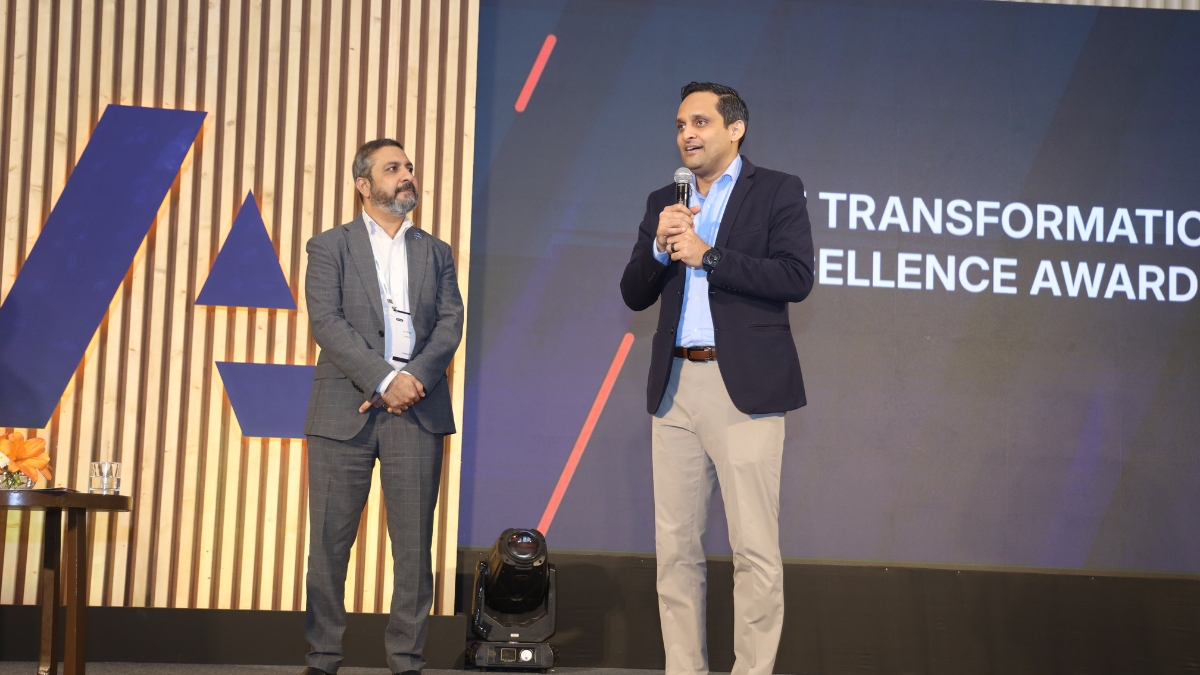

Authored by Anil Tripathi, President, Career Bana Le
The majority of students start by selecting a nation and base their course around it. Those who achieve the best results usually take the opposite approach.
This is one of the oldest debates in study abroad planning. It also has a wrong answer that most students walk into without realising.
The wrong answer is treating country and course as equal variables to weigh against each other. They are not equal. They are sequential. Which one comes first in your thinking determines the quality of every decision that follows.
Start with what the course actually is. Not what it sounds like.
Two students can both enrol in a master's in data science and graduate with completely different skill sets and different job outcomes. The difference is rarely the title on the certificate. It has to do with how the curriculum is organized, whether practitioners or just academics are teaching it, what industry partnerships are in place, and whether the program offers structured work placement.
This matters beyond academics alone. International graduates' immigration paths are becoming more closely linked to job classifications. For graduates in industries with a dearth of skilled workers, several nations now provide quicker post-study pathways. Graduates from employability-focused programs, which are based on real-world projects and employer relationships, are placed in those categories more quickly and with higher income criteria than those from solely taught programs.
This indicates that the course is performing two tasks at once. It is giving you a qualification. It is also determining which immigration category you fall into after graduation. A data science degree with no industry placement component is a fundamentally different product from one built around a co-op model.
Before you look at the nation, look at the curriculum. Examine employer-specific relationships, industry mentorship programs, placement records, and whether graduates are getting positions that you would genuinely want.
Then ask which country hosts the best version of that course.
This is where the sequence pays off. Once you know what the programme should look like, the country shortlist creates itself.
Subject rankings are the right tool here, not overall tables. 55 disciplines from 850 institutions are included in the QS 2026 Subject Rankings. The National University of Singapore is tied with Oxford as the top non-US or UK university in computer science, ranking jointly fourth in the world. In the THE 2026 Subject Rankings, TU Munich is ranked 22nd internationally for engineering, while RWTH Aachen is ranked 19th for mechanical engineering in QS 2026. These rankings are higher than many US universities that Indian students automatically shortlist without looking at the subject-level statistics.
The US leads in STEM research depth, Germany in engineering and applied technology, and the UK in business and humanities at the postgraduate level. These broad generalizations are helpful places to start. Instead than telling you where your buddies went, they tell you where to look first based on what you are studying.
There are specific situations where country should come first.
The sequence is not a rigid rule. Three genuine exceptions exist.
The first is budget. If Germany is the only financially viable destination — and for many Indian students it is, given free tuition at public universities — that constraint is real. Choose the strongest available programme within that country rather than forcing an unfeasible comparison.
The second is family proximity. A student whose family is already settled in Canada has a support network and a potential residency pathway that carries real, measurable value beyond the academic question.
The third is where the field barely exists outside one geography. Certain specialisations — Nordic public health systems, Japanese robotics engineering, or specific strands of renewable energy policy — are genuinely concentrated in particular countries. When the career itself is country-specific, the two variables collapse into one.
The co-op question changes the decision entirely.
This is the angle most students miss.
Canada has built paid, structured work experience into the degree itself. At the University of Waterloo — home to one of the largest co-op programmes in the world — students alternate four-month academic terms with four-month paid work placements, graduating with up to two years of verified Canadian work experience. The university reports that over 8,000 employers participate in the programme across 70 countries. UBC's Applied Science Co-op Programme reported an average monthly student salary of CAD 4,461 in 2025, a 3.2% increase on 2024.
Crucially, as of April 2026, IRCC no longer requires a separate co-op work permit for post-secondary international students — placements are now covered under the existing study permit. That removes a significant administrative barrier.
A student who graduates from a Canadian co-op programme has documented local work experience, employer references, and a professional network before the job search even begins. A student who graduates from a taught-only programme at a more prestigious university has none of these.
The co-op question is course-level, not country-level. Whether a specific programme at a specific university includes structured placement must be researched directly. Do not assume it exists because the country has a reputation for it.
The portability test
Before finalising either variable, run one more check.
Ask whether the degree travels. Some qualifications are deeply tied to the country that issued them. A law degree from the UK requires conversion to practise in India or the US. An MBA from a school with no global employer relationships has limited recognition outside the city it sits in.
Name three countries where you would be willing to work after graduating. Check whether employers in each of those countries recognise the specific qualification you are considering. If the answer is yes across all three, the course travels. If not, the country choice just became considerably more consequential.
The honest answer
Course first. Country second. Budget and personal circumstances as hard constraints that shape both.
A country is where you study for a few years. The skill set you build there stays considerably longer. The environment is temporary. The qualification is not.
The next frontier of enterprise AI: Unlocking value beyond hype