
Nifty Outlook: Nifty is currently trading at an appealing level for the Bears, but still it may not be the best trade to short Nifty at the current level. There are two prime arguments based on the past data that indicate avoiding going short is best advised at this time, said Jahol Prajapati and Saurav Chaube, Research Analyst, SAMCO Securities, in a note on Monday (March 16).
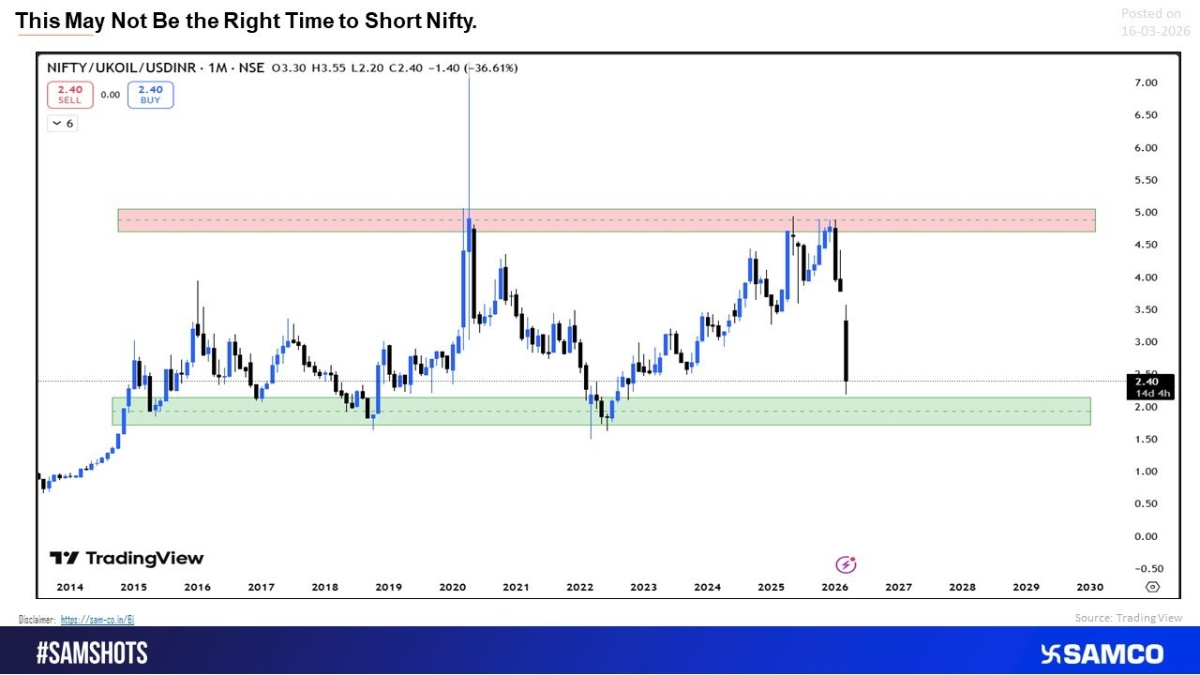
The first by Prajapati, is about the Nifty/Brent Crude ratio, which is approaching a key long-term support zone. Historically, this ratio has rebounded from similar levels, suggesting limited downside from current levels and the risk-reward for fresh short positions may turn out to be unfavourable.
The second argument by Chaube, is based on the historical data of over the past 15 years of market behaviour, when the markets have fallen more than 5per cent in a week.
Including the recent fall of more than 5 per cent during a week, the earlier seven instances of such a fall show that the market often stabilises and rebounds in the subsequent weeks, barring periods of systemic stress.
The recent sharp decline in the ratio appears largely driven by a spike in global crude prices, particularly Brent Crude Oil. If crude prices stabilize or decline, the ratio could rebound even if Nifty remains broadly stable.
This rebound could occur in two possible ways. First, crude prices may decline while Nifty remains stable, improving the ratio. Second, oil prices may hold steady while Nifty moves higher, again leading to a recovery in the ratio.
Given this setup, the probability of a technical bounce from support increases, making aggressive bearish bets on Nifty less attractive for now.
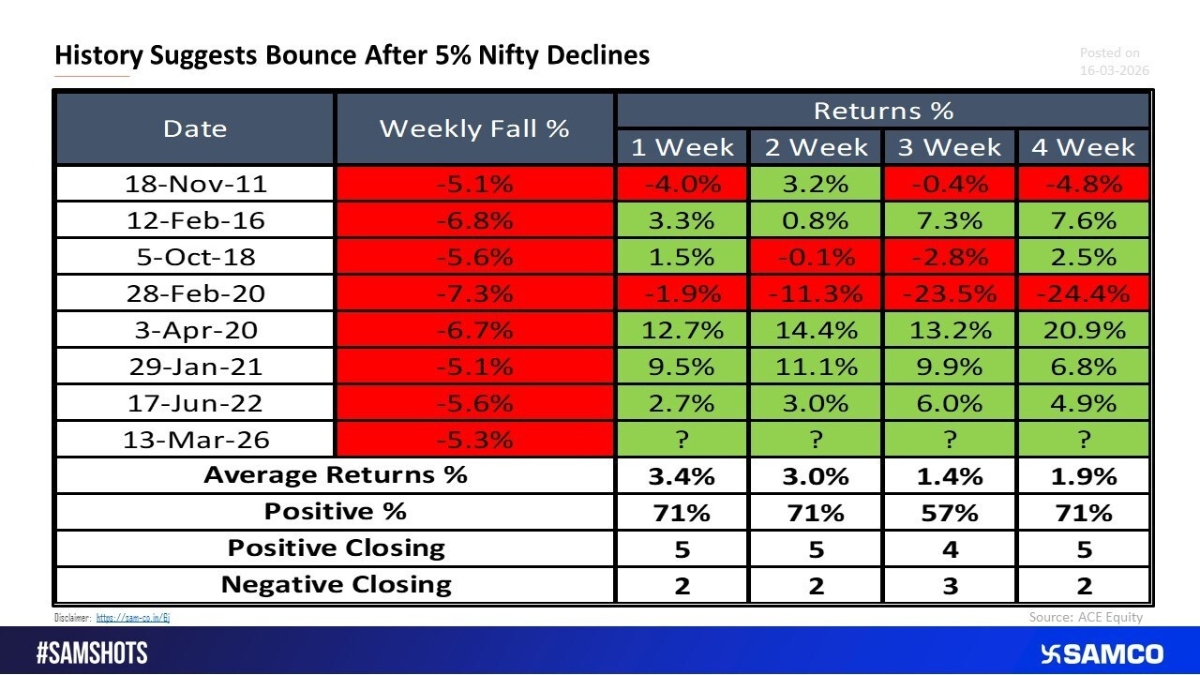
Over the past 15 years, there have been seven instances when the index declined more than 5 per cent in a single week.
Historical data shows that the market often stabilises and rebounds in the subsequent weeks, barring periods of systemic stress.
On average, the index delivered returns of 3.4 per cent in the following week, 3 per cent in two weeks, 1.4 per cent in three weeks, and 1.9 per cent over four weeks after such declines. The probability of positive returns remained high, with 71 per cent positive outcomes in the 1-week, 2-week and 4-week windows, while the 3-week period recorded positive returns 57 per cent of the time.
The latest instance on 13 March 2026, when the Nifty fell 5.3 per cent for the week, places the market at a historically similar setup.